For All Your CNC Technology and crafts needs we are based in pembrokeshire and ship throughout the uk....
Custom Made Signs
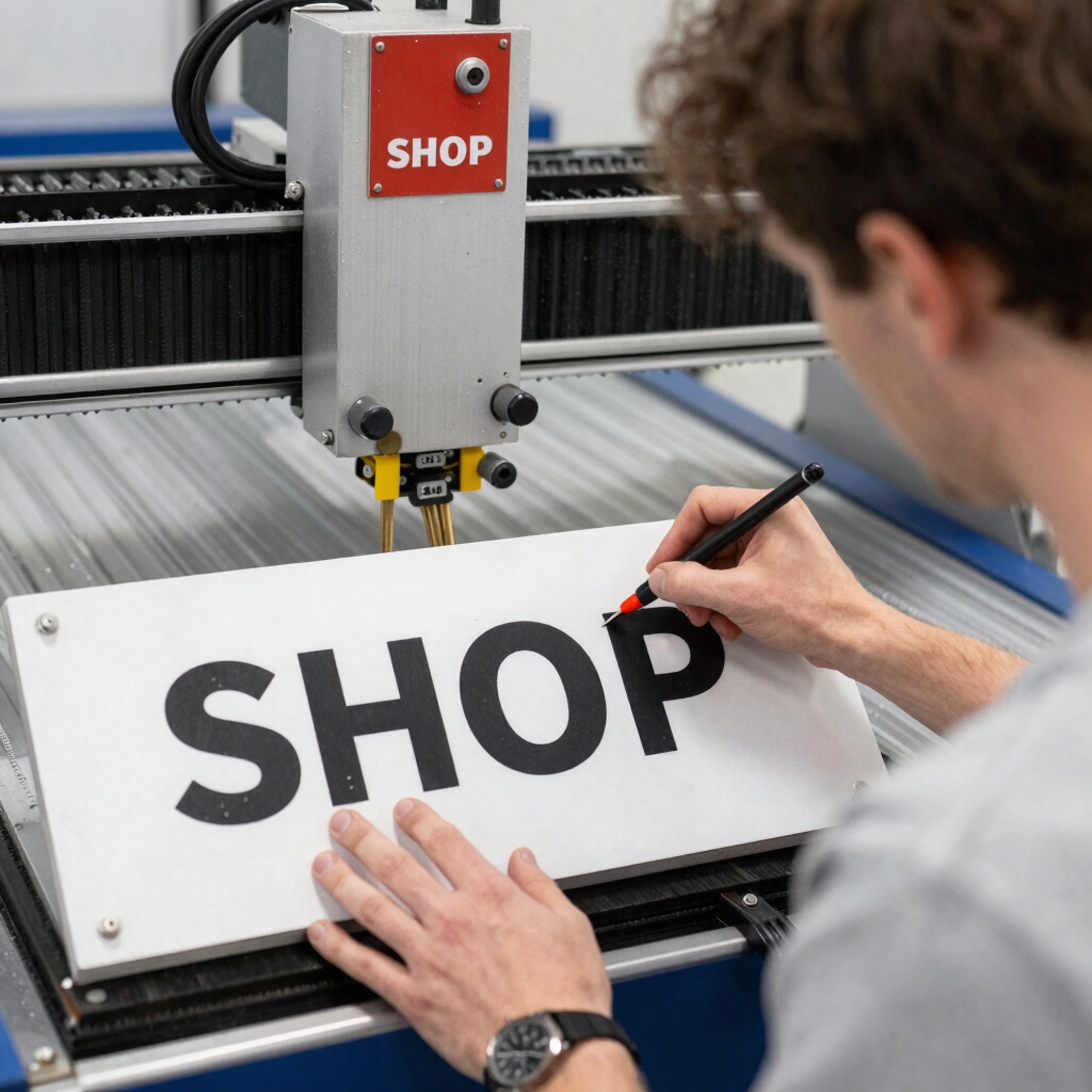
Precision-crafted signage made just for you with CNC technology
Our Services
Custom CNC signage crafted for your business or personal needs
Business Signs
Durable, eye-catching signs tailored to showcase your brand identity.


Personal Signs
Unique, handcrafted signs perfect for home decor or gifts.


Reviews
What our clients say about us
The sign turned out exactly as I imagined. The craftsmanship and attention to detail really stand out.
Florence


Cosheston
Our business sign was completed quickly and looks fantastic. It’s exactly what we needed to attract more customers.


Ben Cox
Pembroke
★★★★★
★★★★★
Frequently asked Questions (FAQ's)
Design and Artwork
Materials
Q: What materials do you recommend for outdoor signs?
A: For exterior durability, we recommend: HDPE (High-Density Polyethylene): Brand names include King Colour Board™ or Sintra® (PVC). Impervious to moisture, UV-stable, and does not rot, warp, or splinter. Comes in various colours with a matte finish. Aluminium Composite (Dibond®):Two thin aluminum sheets sandwiching a polyethylene core. Rigid, lightweight, and extremely durable. Ideal for flat, 2D routed signs with painted fills. Extira®: A wood-composite panel designed for exterior use. Holds fine detail better than HDPE but requires sealing and painting. Western Red Cedar or Mahogany: Traditional wood choices for exterior use. Must be sealed with marine-grade finishes and may require maintenance every 2–3 years.
Q: What materials are best for interior signs?
A: Hardwoods (Maple, Cherry, Walnut): Premium aesthetic, takes fine detail beautifully. Suitable for lobbies, offices, and high-end retail. MDF (Medium-Density Fiberboard): Cost-effective, paints exceptionally smooth, and holds crisp detail. Must be sealed before painting to prevent moisture absorption. Acrylic (Plexiglas®): Great for backlit signs, modern aesthetics, or layered signs. CNC routing leaves a polished edge when properly tooled. PVC (Sintra®): Lightweight, affordable, and available in multiple colours. Good for wayfinding and temporary signage.
Q: Can you rout materials like stone, metal, or glass?
A: Stone (granite, marble, slate): Yes, with specialized diamond tooling and a water-cooled CNC. Stone carving requires significantly longer machine time and higher cost. Slate is the most economical option for engraved stone signage. Metal (brass, aluminum, steel): Yes, using industrial CNC routers with appropriate feeds, speeds, and lubrication. Aluminum is the most common. Brass and steel require heavy-duty equipment and extended machining time. Glass: We typically do not route glass due to high breakage risk. We recommend sandblasting or UV-printing for glass signage.
Process & Timeline
Q: What is the typical workflow for a custom CNC sign?
1. Artwork Review: We assess your design file or sketch and identify any potential issues (small text, thin bridges, etc.). 2. Proofing: We provide a digital proof showing the exact toolpaths, colours, and dimensions. For 3D reliefs, we provide a rendered 3D preview. 3. Approval & Programming: Upon approval, we program the toolpaths, select materials, and schedule production. 4. CNC Routing: The sign is machined. Machine time ranges from 30 minutes for simple signs to 8+ hours for complex relief carvings. 5. Finishing: Sanding, painting, sealing, or applying vinyl fills. 6. Quality Control & Shipping: Final inspection, hardware installation, and crating for shipment. Q: How long does it take to make a CNC sign?
A: Standard lead time is 5–15 business days, depending on complexity. Simple 2D routed signs: 3–7 business days. Complex 2.5D or prismatic letter signs: 7–12 business days. 3D relief or photo-carved signs: 10–20 business days. Rush orders: Available for an additional 25–50% premium. Rush production requires approved artwork within 24 hours.
Q: Can I see a sample or test cut before full production?
A: Yes, for large orders (10+ units) or complex designs, we recommend a sample approval process. We will produce one finished sample for your review. Sample cost is typically the full unit price. If you approve and proceed with the full order, we credit the sample cost toward the total. Sample turnaround adds 3–7 days to the timeline.
Here are the frequently asked questions (FAQ's) for an individual or company ordering CNC-routed signs made from design drawings or photographs, along with detailed answers.
Lettering & Typography
Q: What file formats do you accept for design drawings?
A: We accept a range of formats, but vector files are preferred for crisp, scalable results. Preferred: `.ai` (Adobe Illustrator), `.eps`, `.cdr` (CorelDRAW), `.pdf`, `.dxf`, `.svg` Acceptable: High-resolution `.jpg`, `.png`, or `.tiff` (minimum 300 DPI at final size).
Vector vs. Raster: Vector files (line art) allow us to cut sharp letters and shapes without pixilation. Raster images (photographs) are converted to relief carvings or used for photo-engraving, but fine text in raster format often requires manual redrawing.
Q: Can you create a sign from a photograph of a logo?
A: Yes, but the result depends on the photo quality. If you provide a clear, high-resolution photograph of an existing sign or logo, we can trace and redraw it digitally to create a production-ready vector file.
Limitations: If the photo is blurry, low-angle, or shows the logo at a distorted perspective, we may require additional reference material or charge a redrawing fee to ensure accuracy.
Q: What is the difference between 2D routing, 2.5D carving, and 3D relief on signs?
A: 2D Routing - The CNC cuts through the material or cuts outlines only. Letters and shapes are flat. Simple dimensional letters, cut-out shapes, panel signs. 2.5D Carving - V-bit engraving with varying depth (e.g., flat-bottomed or beveled letters). Letters are carved into the surface. Raised letter signs, chamfered edges, prismatic letters. 3D Relief - Full sculptural carving of logos, emblems, or photographic images with organic depth and texture. Custom logos with wildlife, faces, crests, photo-realistic scenes.
Q: What is the smallest letter size I can have?
A: This depends on the material and carving method.
V-carved letters: Minimum 0.5" (½ inch) for serif fonts; 0.375" (⅜ inch) for sans-serif fonts. Raised (prismatic) letters: Minimum 1" tall to maintain structural integrity and visual legibility. Engraved (filled) letters: Minimum 0.25" (¼ inch) for paint-filled engraving on stable materials like HDPE or acrylic. Smaller letters become illegible from a distance and risk breakage during routing or cleaning.
Q: What is V-carving and when should I use it?
A: V-carving uses a V-shaped bit that cuts deeper in wide areas and shallower in narrow areas, creating sharp, clean letters with faceted interiors.

Contact Us
Ready to craft your perfect CNC sign? Reach out!